
Peptide And Amino Therapy.
Lake Country Training connects clients with licensed telehealth medical providers who offer personalized peptide and amino therapy options based on individual health, wellness, recovery, and performance goals. Medical providers handle all evaluations, prescriptions, treatment decisions, and ongoing medical care, while our Lake Country Training team supports your training, nutrition, and lifestyle habits.
Personalized Options With Licensed Medical Providers.
Peptides and amino based therapies have become an increasingly discussed area of health, wellness, recovery, and medical optimization. But not every compound you see discussed online has the same evidence, regulatory status, approved uses, or safety profile.
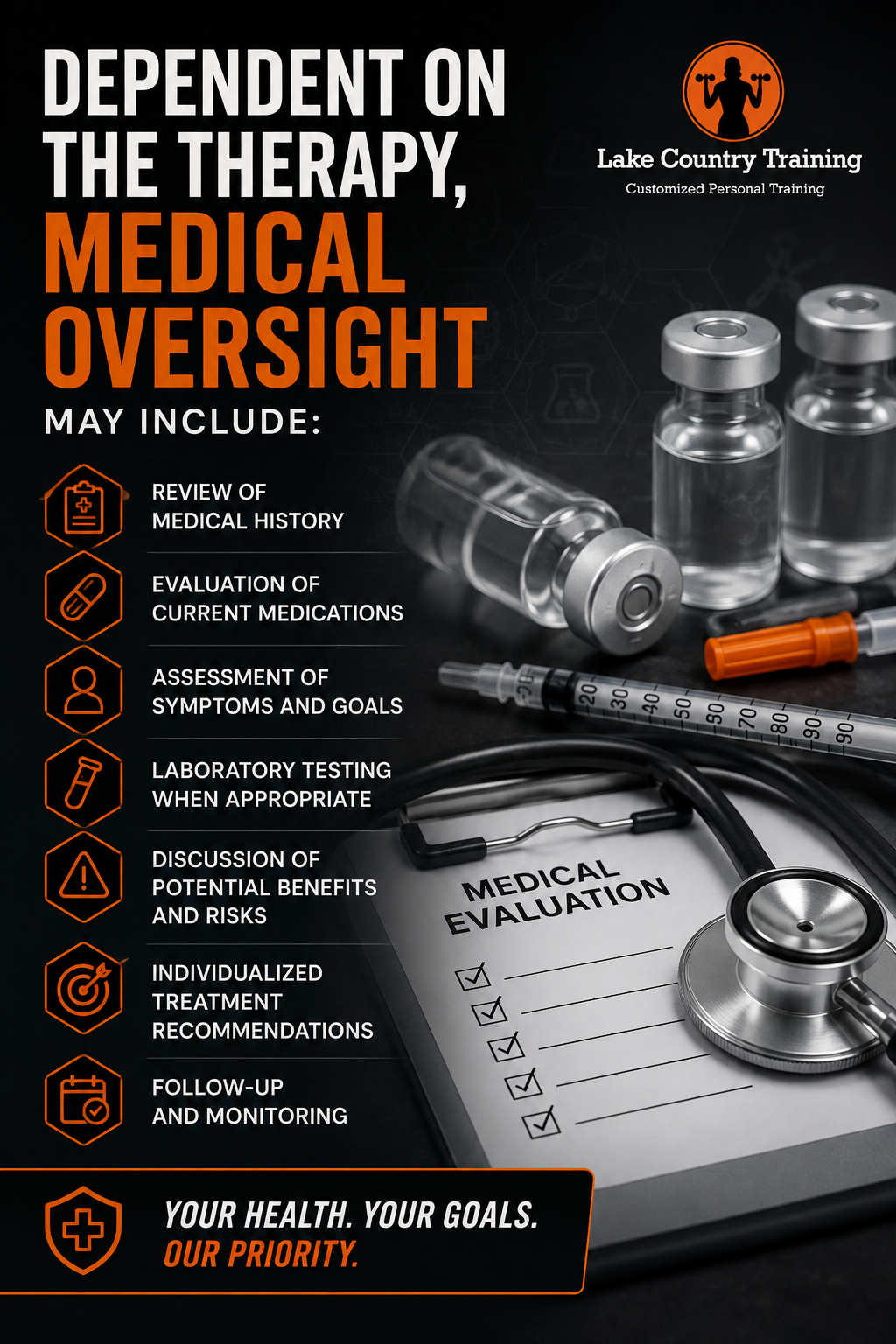
That’s exactly why medical oversight matters. Lake Country Training connects eligible clients with licensed telehealth medical providers who can evaluate their health history, goals, current medications, and individual circumstances before recommending any medically appropriate treatment.
No guessing. No one size fits all protocols.
The Difference Between Peptides & Amino Acids?
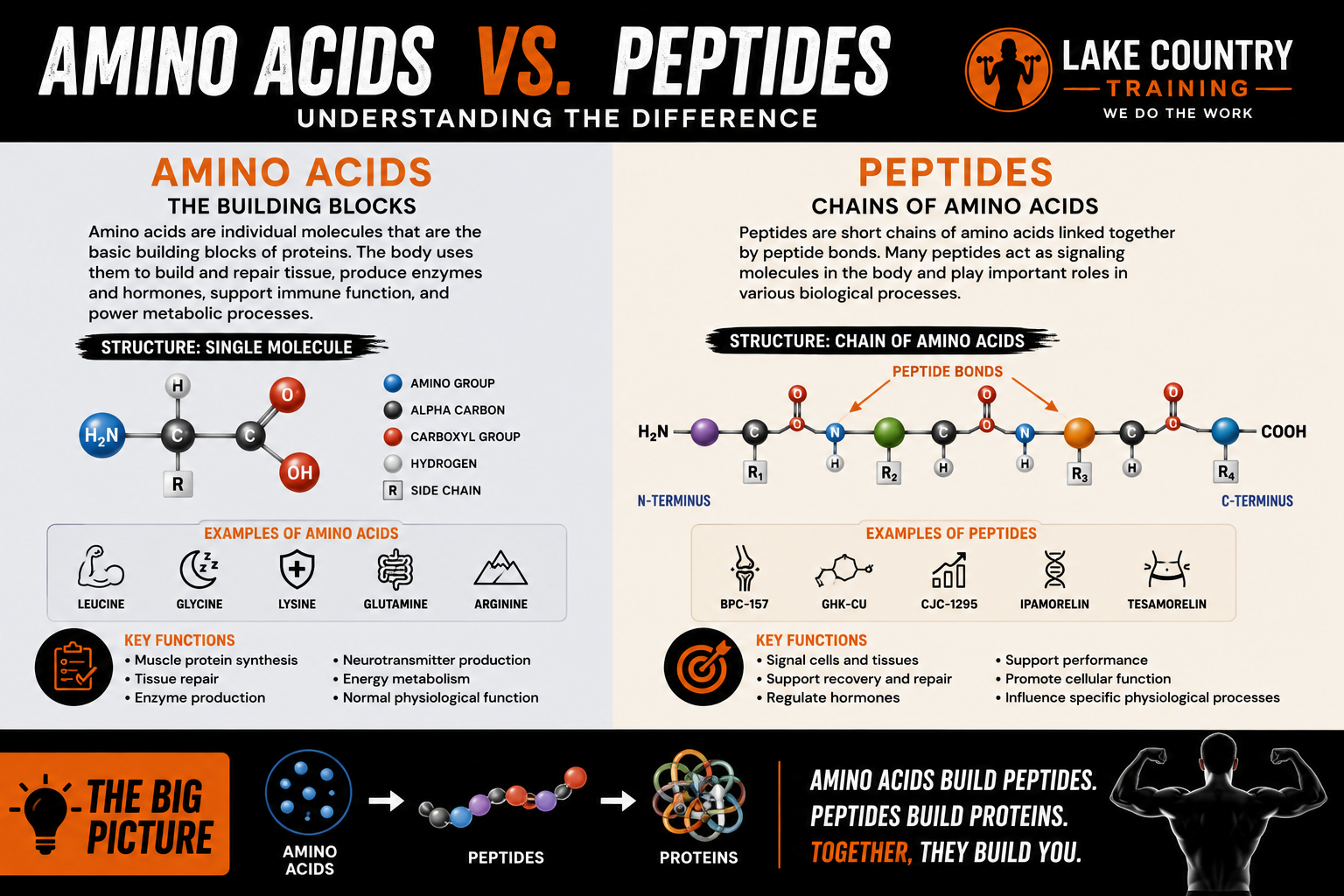
Peptides and amino acids are closely related, but they are not the same thing.
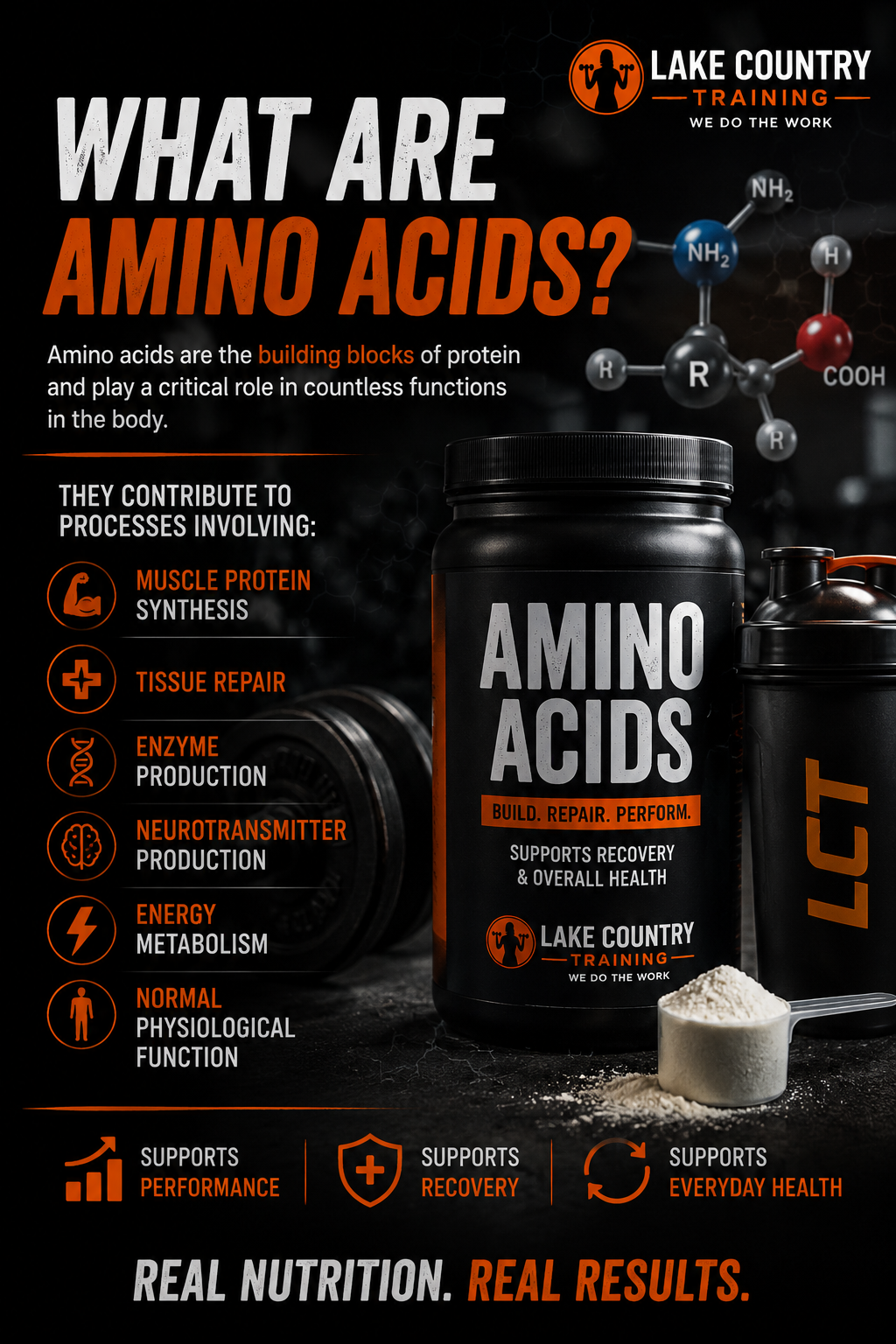
Amino acids are individual organic compounds that serve as the building blocks of proteins. The body uses amino acids in processes involving muscle protein synthesis, tissue repair, enzyme production, neurotransmitter production, energy metabolism, and other normal physiological functions.
Peptides consist of short chains of amino acids linked together by peptide bonds. Many naturally occurring peptides act as signaling molecules within the body and participate in a wide range of biological processes.
An easy way to understand the relationship is:
Amino Acids → Peptides → Proteins
Think of amino acids as individual building blocks. Connect several amino acids together and you can form a peptide. Longer and more complex amino-acid chains can form proteins.
While peptides are made from amino acids, the terms shouldn’t be used interchangeably. Individual amino acids, peptide compounds, and proteins have different structures and functions within the body.
When discussing peptide or amino based therapies, the specific compound matters. Evidence, potential uses, regulatory status, risks, and medical appropriateness can vary significantly from one compound to another. That’s why treatment should start with the individual and not the product. A licensed healthcare provider can evaluate your health history, goals, and medical needs to determine whether a specific therapy is appropriate.
What Are Peptides?
Peptides are short chains of amino acids. Many peptides occur naturally within the human body and participate in biological signaling and numerous physiological processes.
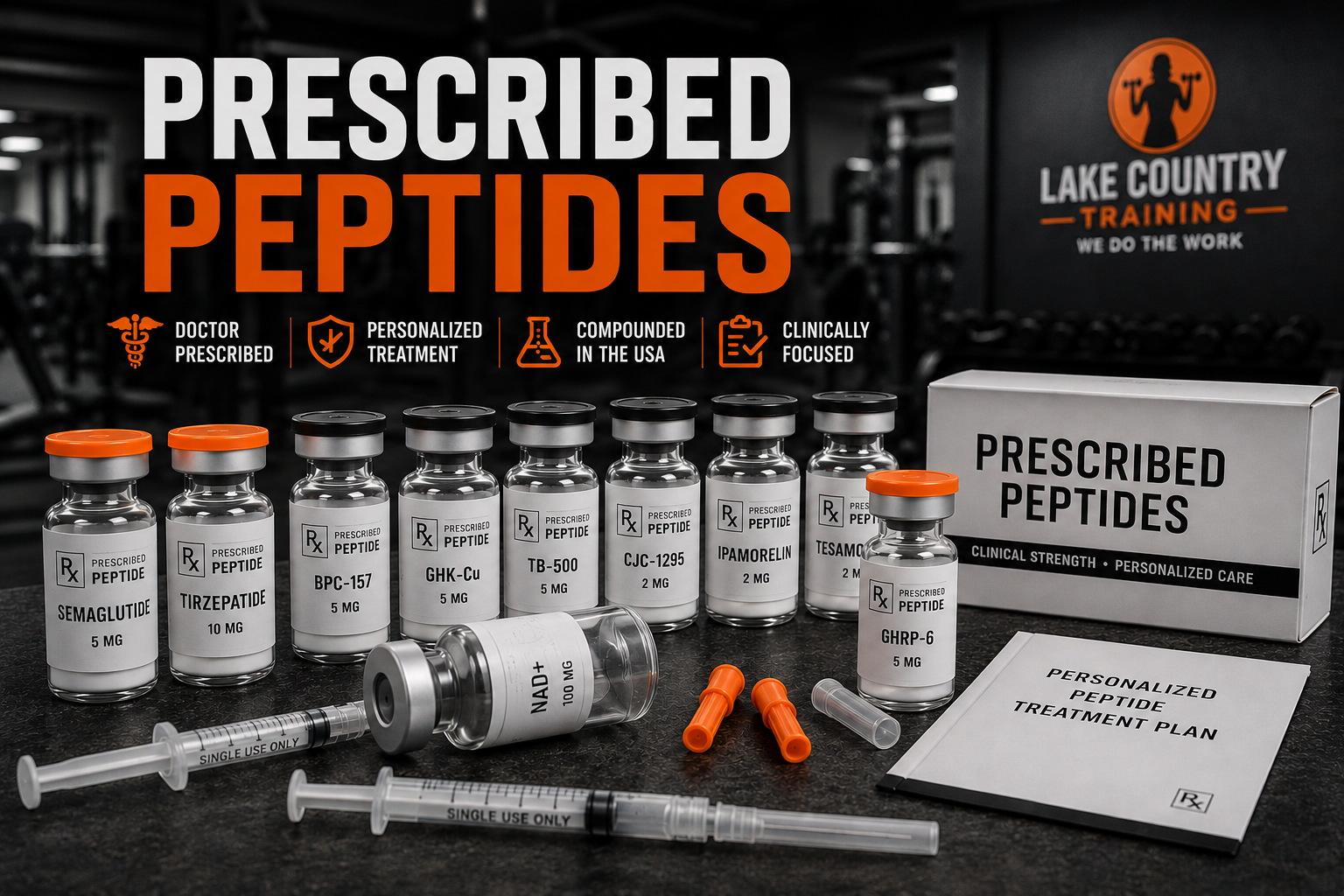
Peptide based medications also have legitimate applications in modern medicine. However, the term “peptide” covers a massive category.
Some peptide medications have FDA approved indications. Other compounds remain investigational or may not have FDA approval for a particular proposed use. Those in that category are typically offered as “Research Compounds.”
That distinction matters. A compound becoming popular online doesn’t automatically make it appropriate, effective, or safe for you.
What Are Amino Acids?
Amino acids serve as the building blocks of proteins and play important roles throughout the body. Different amino acids and amino derived compounds have different applications, evidence, and potential uses.
More isn’t automatically better. Use the right tool for the right reason.
Medical Evaluation For Peptide And Amino Therapy.
Peptide therapy shouldn’t begin with: “I saw this on social media. How much should I take?”
That’s backwards. The starting point should be your health, goals, medical history, medications, potential risks, and the available evidence.
A qualified medical provider can determine whether a particular therapy has a legitimate role in your care.
Areas Of Interest For Peptide And Amino Therapy.
Depending on the individual, available treatments, medical evidence, and provider recommendations, peptide or amino-based therapies may be discussed in connection with areas such as:
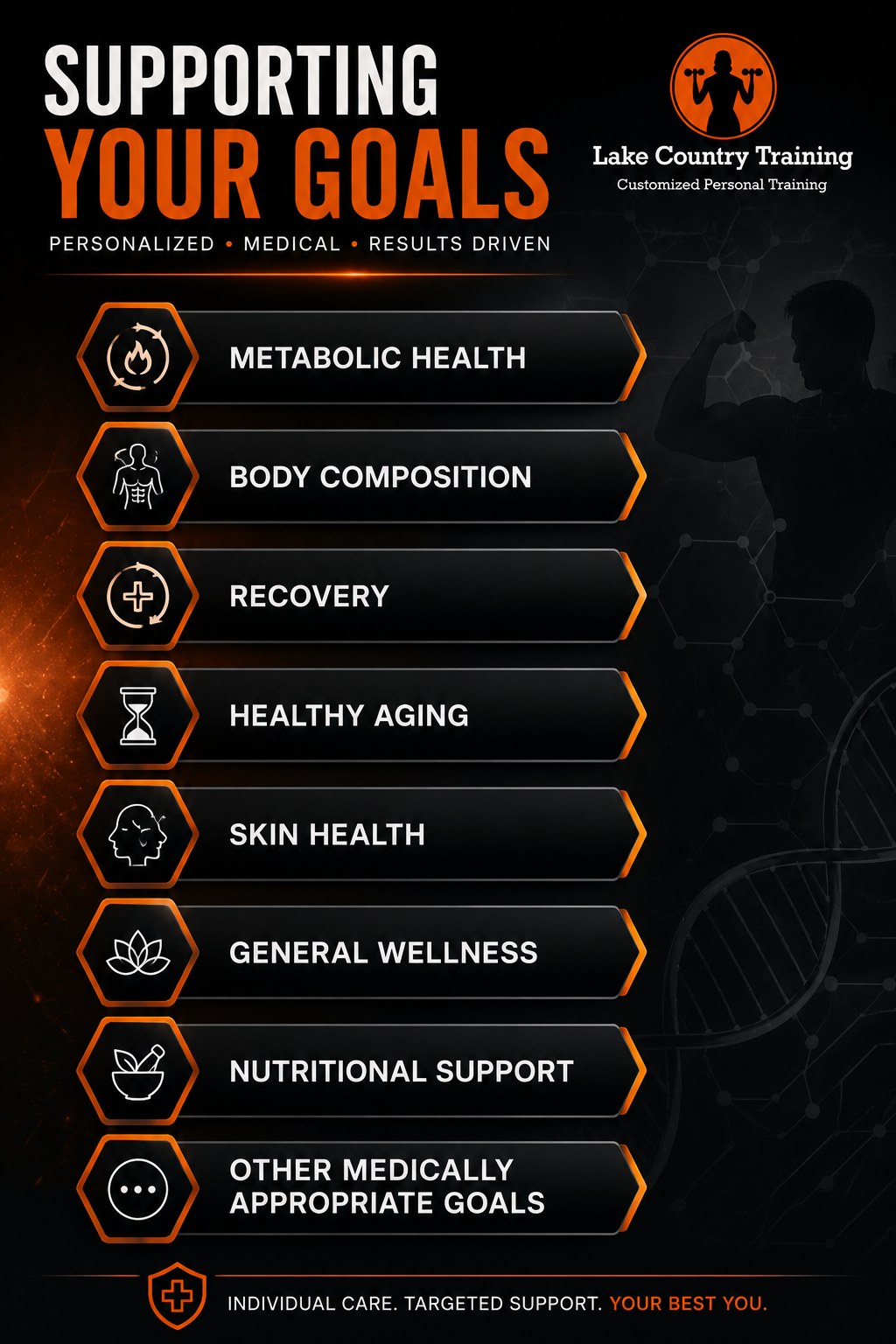
“Availability” does not mean a peptide and amino therapy treatment is appropriate for you. Your healthcare provider determines whether a particular therapy makes sense for you.
Not All Peptides Are The Same.
This is important. “Peptides” shouldn’t be treated as one medication category where every compound has the same level of evidence or regulatory status. They don’t.
Some peptide based drugs have FDA approved medical uses. Other substances commonly discussed as peptides remain investigational, lack approval for certain uses, or may not be approved for human use. We believe in making that distinction clear.
Your medical provider should explain what treatment is being considered, why it’s being considered, its regulatory status when relevant, potential risks, alternatives, and what evidence supports its use.
Medical Optimization Still Requires The Basics.

Where Lake Country Training Fits.
Lake Country Training isn’t trying to replace your doctor.
We do what we do best: Training. Nutrition. Coaching. Accountability. Execution.
Our telehealth medical partners handle medical evaluation, treatment recommendations, prescribing when appropriate, and medical monitoring.
That creates a clear division of responsibility. The medical provider manages the medicine. Lake Country Training helps you execute the lifestyle.
How The Telehealth Process Works.
1. Get Started
Contact Lake Country Training to learn more about available telehealth services.
2. Complete A Medical Evaluation
A licensed healthcare provider reviews your medical history, goals, current medications, and other relevant information.
3. Discuss Appropriate Options For Peptide And Amino Therapy
Your provider determines whether any available therapy is appropriate and discusses potential benefits, limitations, risks, and alternatives.
4. Receive Your Peptide And Amino Therapy Treatment Plan
When medically appropriate, your provider determines the treatment and provides the necessary medical instructions.
5. Continue Medical Follow-Up
Your provider determines appropriate monitoring and follow-up based on your treatment.
Frequently Asked Questions.
Are peptides FDA approved?
Some peptide based medications have FDA approved uses. Other compounds marketed or discussed as peptides may not have FDA approval for a particular use or may remain investigational, those are typically found online as “Research Compounds.” Always ask about the specific compound rather than assuming all peptides have the same regulatory status.
Are peptides safe?
Safety depends on the specific compound, dose, patient, medical history, other medications, product quality, and intended use. That’s why medical evaluation matters.
Does Lake Country Training prescribe peptides?
No. Lake Country Training does not prescribe medications. Licensed healthcare providers determine whether medical treatment is appropriate and handle prescribing and medical management.
Can I combine peptide and amino therapy with personal training?
Yes, when your healthcare provider determines that your medical treatment and exercise program are appropriate for you. That’s one of the advantages of our model. We can help you build your training, nutrition, recovery, and lifestyle while your medical provider manages your medical care.
Explore Your Options For Peptide And Amino Therapy.
You’ve probably seen hundreds of claims about peptides online. Don’t build your health strategy around hype. Get evaluated. Understand your options. Know what you’re taking and why you’re taking it. Do your own research as well.
Lake Country Training can connect eligible clients with licensed telehealth medical providers to discuss available peptide and amino-based treatment options.
Medical disclaimer: Lake Country Training does not diagnose medical conditions, provide medical treatment, or prescribe medications. Medical services are provided by independent licensed healthcare providers. Availability, eligibility, regulatory status, evidence, risks, and appropriate uses vary significantly between individual therapies. A healthcare provider determines whether any treatment is appropriate for a particular patient.