Personal Training for Seniors: Strength, Balance & Independence
Getting older does not mean you have to accept becoming weaker, less mobile, or less independent. While aging naturally brings changes in muscle mass, strength, balance, and recovery, the right exercise program can help older adults maintain physical function and continue enjoying the activities that matter most.
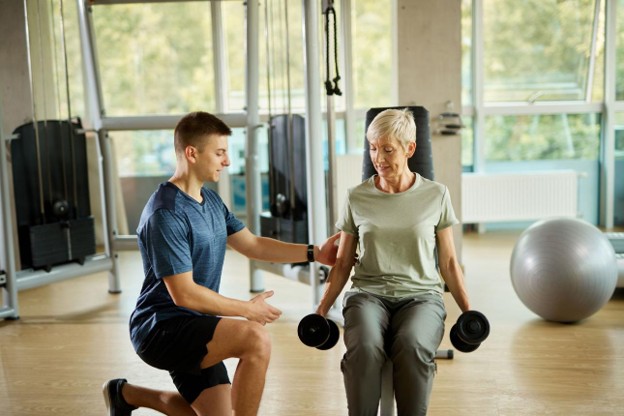
Personal training for seniors provides a structured, individualized approach to exercise. Instead of following a generic workout routine, older adults can work with an experienced personal trainer who considers their fitness level, movement limitations, health history, and personal goals.
At Lake Country Training, we believe that strength training is about much more than lifting weights. For older adults, it can mean climbing stairs with greater confidence, getting out of a chair more easily, carrying groceries, keeping up with grandchildren, or continuing to enjoy an active lifestyle.
Whether you are just beginning to exercise or have remained active for decades, a well-designed program can help you work toward better strength, balance, mobility, and long-term independence.
Why Personal Training For Seniors Matters
As people age, the body gradually experiences changes that can affect everyday movement and physical performance.
Muscle mass and strength may decline, joints can become stiffer, and balance or coordination may change. Some older adults also become less physically active because of discomfort, uncertainty, or fear of injury.
These changes are common, but they do not mean that meaningful improvements are impossible.
Research consistently supports physical activity, including resistance training, as an important part of healthy aging. Older adults can improve strength and physical function through appropriately designed exercise programs, even when they have little previous strength training experience.
A qualified personal trainer helps turn those general recommendations into a practical program built around the individual.
The objective is not to make every senior train like a competitive athlete. It is to develop the physical abilities that help them remain capable, confident, and active.
Strength Training Helps Older Adults Maintain Independence
One of the most important components of senior fitness is resistance training.
Resistance training involves challenging the muscles through controlled movements using equipment such as dumbbells, resistance bands, cable machines, weight machines, or body weight.
For older adults, these exercises can support the strength needed for daily activities.
Examples include:
- Standing up from a chair without assistance.
- Walking up and down stairs.
- Carrying groceries or household items.
- Lifting objects safely.
- Getting in and out of a vehicle.
- Maintaining strength for hobbies, travel, and recreation.
These everyday movements require muscular strength, coordination, and confidence.
A personalized strength training program might include squats to a chair, supported rows, controlled step-ups, hip-hinge movements, and other exercises selected for the individual’s abilities.
The exercises do not need to be complicated. They need to be appropriate, progressive, and performed consistently.
Understanding Age-Related Muscle Loss
Age-related loss of muscle mass and function is often discussed in connection with sarcopenia.
Sarcopenia can contribute to reduced strength, slower movement, and greater difficulty completing everyday tasks. It is influenced by multiple factors, including aging, physical inactivity, illness, and nutritional status.
Although resistance training cannot eliminate every age-related change, it is one of the most effective strategies for improving muscular strength and supporting physical function.
This is why strength training should be viewed as a long-term investment in independence, not simply an activity for younger adults.
Balance Training Can Improve Confidence and Everyday Movement
Balance is another essential component of personal training for seniors.
Maintaining balance requires coordination among the muscles, nervous system, vision, and sensory systems.
As these systems change with age, certain activities may become more challenging. Walking on uneven ground, turning quickly, stepping over obstacles, or navigating stairs can require greater attention.
A properly designed balance program challenges stability in a controlled, progressive environment.
Depending on the individual, exercises may include:
- Supported single-leg standing.
- Heel-to-toe standing or walking.
- Controlled weight shifts.
- Side-stepping movements.
- Step-ups using a stable support.
- Standing and sitting with improved control.
- Walking drills that develop coordination.
Not every exercise is appropriate for every person. Someone with significant balance limitations may begin with seated or supported movements before progressing.
The goal is to develop the ability to move more confidently during daily life.
Can Exercise Help Reduce Fall Risk?
Falls are a significant health concern among older adults.
Exercise programs that appropriately combine balance and functional training can help reduce fall risk in community-dwelling older adults.
However, exercise is only one part of fall prevention. Vision changes, medications, footwear, home hazards, and certain medical conditions can also affect risk.
A personal trainer can help improve physical capacity and movement confidence, but a person with recurrent falls, dizziness, or unexplained balance problems should also seek medical evaluation.
At Lake Country Training, we focus on training within an individual’s capabilities and progressing only when the movement is appropriate.
Mobility & Flexibility Support Better Quality Of Life
Strength and balance are essential, but mobility also plays an important role in healthy aging.
Mobility refers to the ability to move joints and body segments through useful ranges of motion while maintaining control.
Older adults may experience stiffness in areas such as the hips, shoulders, ankles, and upper back.
Reduced mobility can make everyday activities more difficult, including reaching overhead, bending down, rotating the body, or getting in and out of a car.
A senior fitness program may incorporate gentle mobility exercises, controlled stretching, and strength movements through comfortable ranges of motion.
The objective is not to force extreme flexibility. It is to maintain or improve the movement needed for everyday activities.
When appropriate, mobility work can be incorporated into the warm-up, strength training, and cool-down rather than treated as an entirely separate workout.
Personal Training For Seniors Is Not One Size Fits All
Two people of the same age may have very different fitness abilities.
A healthy 70-year-old who has exercised consistently for decades may tolerate a demanding resistance training program.
Another 70-year-old who has been inactive, experienced recent surgery, or developed significant mobility limitations may need a more conservative starting point.
Age alone should never determine the difficulty of a workout.
An individualized program considers several factors:
- Current strength and physical conditioning.
- Previous exercise experience.
- Balance and mobility.
- Existing injuries or movement limitations.
- Relevant medical conditions and clinician guidance.
- Personal goals and preferred activities.
- Recovery needs and weekly schedule.
The program should reflect what the person can do today while providing a realistic pathway toward improvement.
At Lake Country Training, we emphasize individualized coaching instead of relying on generic programs that assume everyone has the same starting point.
What Exercises Are Good For Older Adults?
The most useful exercises are those that improve physical abilities relevant to the individual’s goals.
A comprehensive program often includes several categories of movement.
Lower Body Strength
Lower-body exercises support walking, stair climbing, standing, and other daily activities.
Examples may include:
- Chair squats or sit-to-stands.
- Supported step-ups.
- Leg presses.
- Glute bridges.
- Calf raises.
Upper Body Strength
Upper-body exercises support carrying, lifting, pushing, pulling, and maintaining everyday physical capability.
Examples may include:
- Seated rows.
- Wall or elevated push-ups.
- Dumbbell curls.
- Cable or band exercises.
- Modified overhead movements when appropriate.
Balance & Coordination
Balance exercises help develop stability and control during standing and walking.
Examples may include:
- Supported single-leg balance.
- Weight-shifting drills.
- Tandem standing.
- Controlled lateral steps.
- Functional walking exercises.
Cardiovascular Conditioning
Aerobic activity supports cardiovascular health and endurance.
Depending on fitness level and medical considerations, activities might include walking, stationary cycling, swimming, or other low-impact exercise.
The specific combination depends on the individual.
Someone with arthritis, osteoporosis, a history of falls, or a recent medical event may require exercise modifications or guidance from a healthcare professional before beginning certain movements.
How Often Should Seniors Work With A Personal Trainer?
There is no universal schedule that works for everyone.
Some older adults benefit from meeting with a personal trainer once or twice per week while performing additional exercises independently.
Others may prefer two or three supervised sessions per week, especially when they are learning movement patterns, building confidence, or working toward specific strength goals.
The Physical Activity Guidelines for Americans recommend that older adults incorporate aerobic activity, muscle-strengthening exercise, and balance training into their weekly routines.
For muscle-strengthening activity, the general recommendation is at least two days per week. Older adults are also encouraged to perform multicomponent activities that include balance and functional movement.
The right training frequency depends on experience, health, recovery, goals, and available time.
A qualified trainer can help determine a manageable schedule and adjust it as fitness improves.
Is Personal Training Safe For Seniors?
For many older adults, properly selected and supervised exercise is both appropriate and beneficial.
However, safe programming requires more than choosing light weights.
A responsible trainer should consider medical history, movement ability, exercise technique, fatigue, and progression.
Training sessions may begin with basic movements and modest resistance before advancing toward more challenging exercises.
Individuals with unstable medical conditions, unexplained symptoms, recent surgery, or significant physical limitations may need clearance or specific guidance from their healthcare provider.
Personal trainers are not a substitute for physicians or physical therapists.
Instead, personal training can complement appropriate medical care by helping older adults develop and maintain their physical fitness.
The Importance Of Proper Progression
A common mistake is assuming that older adults should never lift challenging weights.
In reality, resistance training can be progressively adjusted for many older adults.
The key is matching the exercise and resistance to the individual’s current ability.
As strength, coordination, and confidence improve, the program may gradually increase resistance, repetitions, movement complexity, or training volume.
Progress should be earned through consistent technique and appropriate recovery, not rushed.
The Mental & Lifestyle Benefits Of Staying Active
The value of exercise extends beyond muscle strength.
Regular physical activity can support mood, sleep, cognitive health, and overall quality of life.
For some older adults, scheduled personal training sessions also provide structure, accountability, and a sense of progress.
Maintaining the ability to participate in hobbies, family activities, travel, and recreation can have a meaningful impact on everyday well-being.
Physical fitness is not only about adding years to life. It is also about supporting the ability to enjoy those years.
Personal Training For Seniors In Oconomowoc & Lake Country, Wisconsin
Finding a personal trainer who understands the needs of older adults can make a meaningful difference.
At Lake Country Training, we provide individualized personal training and fitness coaching for adults with a wide range of ages, abilities, and goals.
Our approach focuses on practical strength, improved movement, consistency, and sustainable progress.
We serve clients throughout Oconomowoc and surrounding Lake Country communities, including Delafield, Hartland, Pewaukee, Nashotah, Okauchee, Merton, Summit, Dousman, and Waukesha.
Depending on the individual’s needs and circumstances, training options may include:
- In-home personal training.
- Private studio training.
- Coaching at a local gym.
- Online fitness coaching.
- A combination of in-person and online training.
The objective is to make quality coaching accessible and practical while providing the individual attention needed to build confidence and consistency.
Frequently Asked Questions About Personal Training For Seniors
Is 70 or 80 Too Old to Start Strength Training?
No. Many people can benefit from appropriately designed strength training well into their 70s, 80s, and beyond. The starting point, exercise selection, and progression should reflect the individual’s abilities and health considerations.
Can Seniors Build Muscle After Age 65?
Yes. Older adults can improve muscular strength and may increase muscle mass through resistance training. The degree of improvement varies with training consistency, nutrition, health, and individual circumstances.
Should Seniors Lift Weights or Just Walk?
Walking is valuable for cardiovascular fitness and general activity, but it does not replace all the benefits of resistance and balance training. A well-rounded program generally includes multiple types of exercise.
Do I Need Gym Experience Before Hiring a Personal Trainer?
No. Personal training can be especially helpful for beginners who want guidance with exercise selection, technique, and a realistic starting routine.
Can a Personal Trainer Help With Balance?
A qualified personal trainer can incorporate appropriate balance and functional exercises into a program. However, frequent falls, severe instability, dizziness, or unexplained balance problems warrant medical assessment.
Is In-Home Personal Training Available for Older Adults?
Yes. Lake Country Training offers in-home personal training options in Oconomowoc and surrounding Lake Country communities, allowing eligible clients to exercise in a familiar environment.
Invest In Strength, Confidence, & Independence
Aging is inevitable, but becoming less active does not have to be accepted as an unavoidable part of life.
A thoughtful fitness program can help older adults build strength, improve balance, maintain mobility, and remain more capable during everyday activities.
Personal training for seniors provides individualized guidance, appropriate progression, and accountability to support those goals.
At Lake Country Training, we believe fitness should help you live your life not limit it.
Whether your goal is to feel stronger, improve everyday movement, maintain independence, or simply become more active, we can help you develop a realistic plan.
Contact Lake Country Training to schedule a consultation and learn how personalized fitness coaching can support your strength, balance, mobility, and long-term independence.
Schedule Your Consultation With Lake Country Training Today.
Disclaimer: This article provides general fitness education and is not medical advice. Exercise programs should be individualized. Consult a qualified healthcare professional before starting or significantly changing an exercise program if you have medical concerns, recent surgery, unexplained symptoms, or significant mobility limitations.
Recommended Scientific References: